BELT RAIDER
Arcade Space Shooter & Newtonian Roguelite
Take command of the MCRN-08 Hellya in a gritty Newtonian space combat loop. Engage automated surface outposts and sensor nodes while your swiveling PDCs automatically clear incoming fire, and survive the impending arrival of the screen-filling Destroyer Flagship.
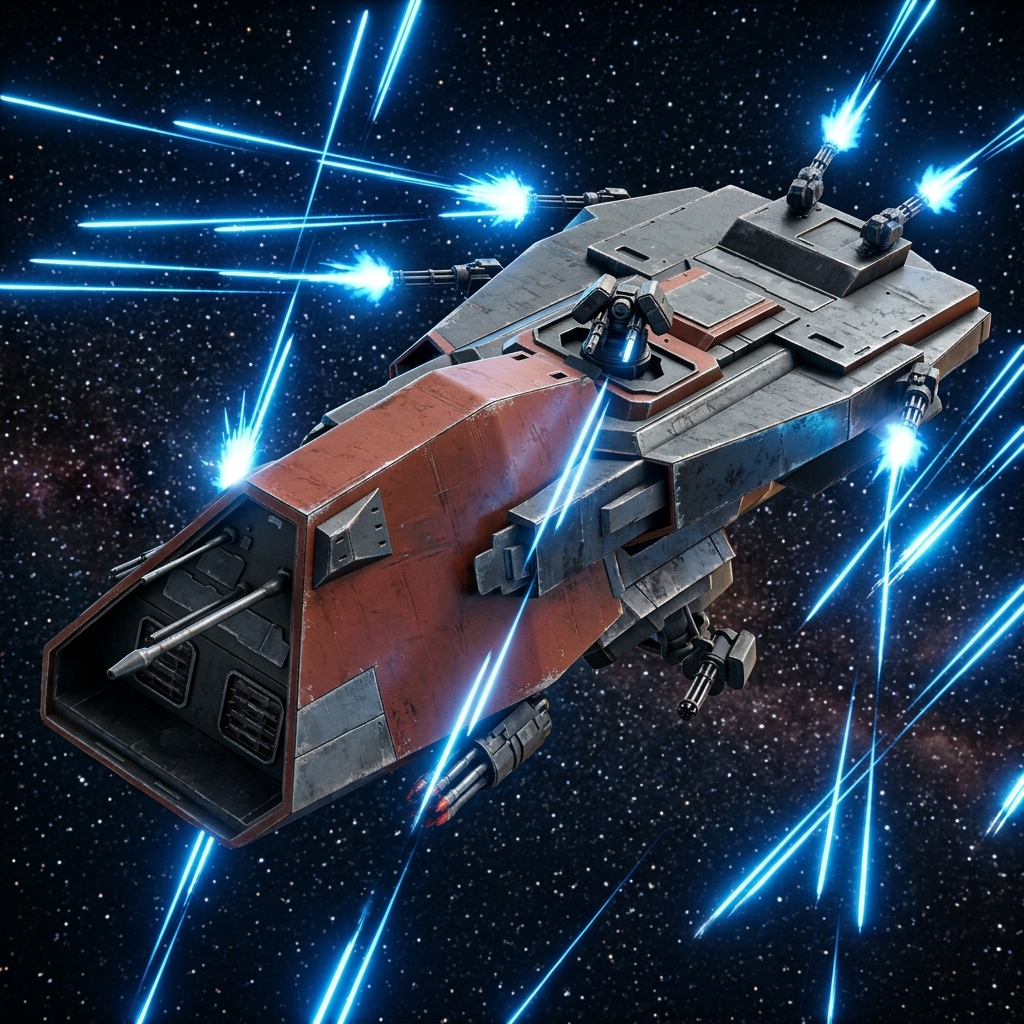
Telemetry & Mission Profile
Command a heavy MCRN Tanto-class gunship through automated corporate defense grids.
Mission Parameters
- Deployment Target: Corporate seteshang (outposts) and sensor arrays anchored to drifting Belt asteroids.
- Tactical Objective: Silence automated surface grids, dodge active radar wedges, and secure wreckage before warping out.
- Subsystem Degradation: Progressive 3-hit subsystem damage matrix affecting Thrusters (nitrogen leak), HUD (static), and Reactor (blackout).
- Defense Suite: Automated swiveling port and starboard PDCs that automatically track and intercept incoming fire.
- Salvage Operations: Hold-management loop for gathered debris with scaling score multipliers and escalating threat levels.
- Flagship Threat: Imminent deployment of the screen-filling corporate Destroyer flagship if sector dwell time exceeds threshold.
Design Statement
Belt Raider was built around a single philosophy: tactical decision-making combined with realistic zero-gravity inertia. The V-ship vanguard design was replaced with a boxy, industrial Martian gunship equipped with automated Point Defense Cannons (PDCs). Navigating the belt is a calculation of vectors, using asteroid shadows to evade sweeping radar arrays, gathering salvage, and warping out before the flagship arrives.
The Operational Split
A genre is defined by its core gameplay loop and the problem it forces the player to solve. Belt Raider splits the problem in two.
Reverse Tower Defense
The Tactical Maze
In standard shooters, enemies actively chase you. In Belt Raider, the threat is structural. The outposts are static, automated fortresses utilizing algorithmic targeting, zone controls, and tiered shields.
The Loop
Outpost placement within the drifting asteroid field creates a shifting "kill zone" maze. You are the wave, forcing your way through the defense grid.
Inertial Vector Simulation
The Physics Pilot
Most action games use direct, arcade-style input (press right, move right). Belt Raider rejects this. The MCRN-08 Hellya operates entirely on Newtonian physics—mass, thruster impulse, rotational torque, and zero-gravity drift.
The Loop
You cannot just halt or hide. You must calculate your velocity vector, apply counter-thrust, and use the momentum of the asteroids to loop around firing arcs.
The Synthesis: Worlds Collide
The core magic of Belt Raider happens in the spatial intersection of these two systems.
Crack the Matrix Using Momentum
"In a standard space shooter, threats move relative to you. In Belt Raider, the threats (towers) are static, but the environment (asteroids) block their lines of sight. You must use Newtonian drift to navigate the moving gaps."
Newtonian Vector Physics
Master zero-gravity flight with realistic inertia, utilizing retro-thruster burns, rotation torque, and controlled drifts to slide past tower weapon ranges.
Automated PDC Defense
Your swiveling port and starboard Point Defense Cannons actively track and shoot down incoming hostiles, missiles, and outpost nodes while you focus on piloting.
Subsystem Degradation Grid
Manage a progressive 3-hit subsystem damage matrix: Thrust nitrogen leaks (loose vectors), HUD sonar static (blind radar), and Reactor blackouts (no weapons).
Stealth Sensor Shadows
Hide from rotating pie-wedge scanner sweeps by placing drifting asteroids directly between your ship and corporate radar dishes to plan surprise attacks.
High-Risk Salvage & Flagship Threat
Stay in active zones to collect wreckage and scale your score multiplier, but beware: the screen-filling corporate Destroyer flagship will warp in if you linger too long.